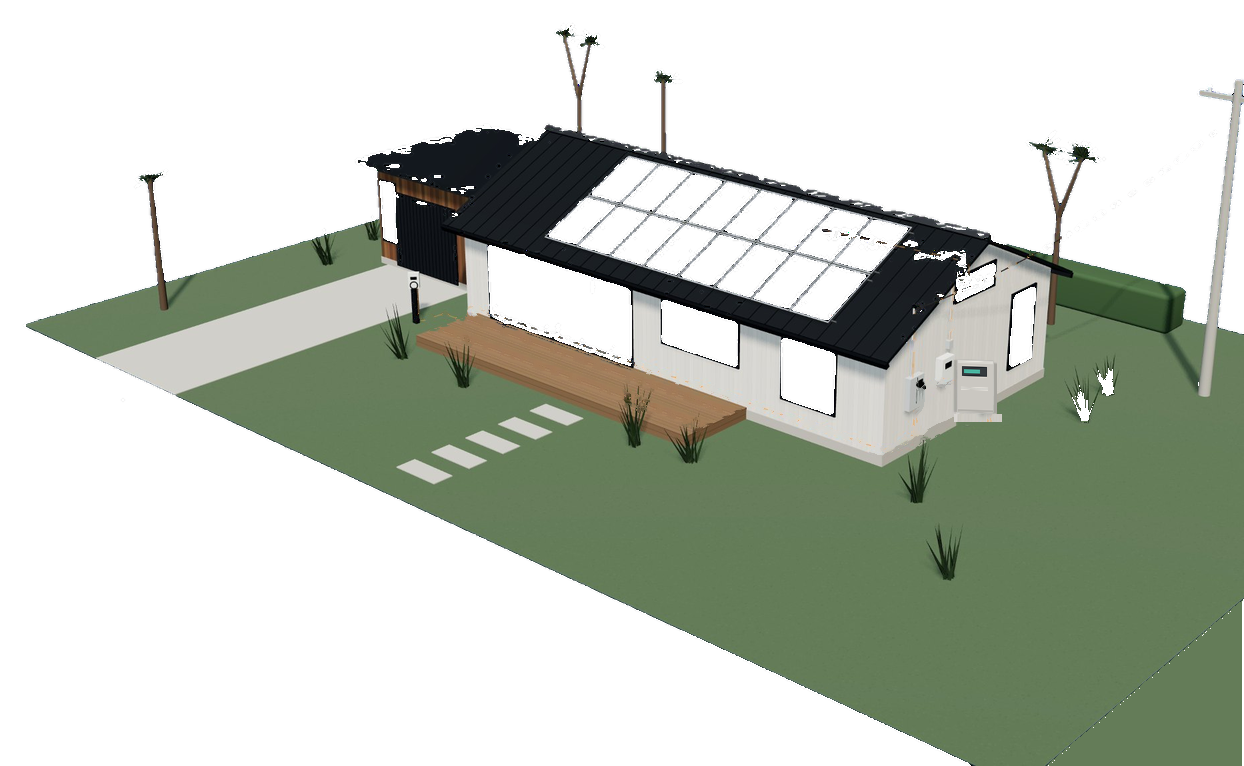
A home battery is a set of lithium cells with a management system, connected to the property through an inverter. Two numbers describe it, and they are often confused.
Capacity and power
Capacity, in kilowatt-hours (kWh), is how much energy it holds. Power, in kilowatts (kW), is how fast it can deliver that energy. A battery with plenty of capacity but modest power can run the fridge and lights all evening, yet struggle to carry an oven, kettle and heat pump at once.
Usable energy
Batteries are not run from completely full to completely empty, because that shortens their life. The usable capacity is lower than the nominal figure, and some energy is lost each time the battery charges and discharges. Sizing should be based on usable energy, not the number on the box.
How it decides what to do
- Solar surplus available → charge
- Demand exceeds solar → discharge
- Battery at its lower limit → import from the grid
- Network outage → supply backup circuits, if designed for it
Where it goes
Location matters for safety and battery life. Batteries need ventilation, protection from direct sun and weather, clearance from doors and windows where required, and a sensible cable route to the inverter and switchboard. AS/NZS 5139 is the standard that addresses the safety of battery systems used with power conversion equipment.
Related