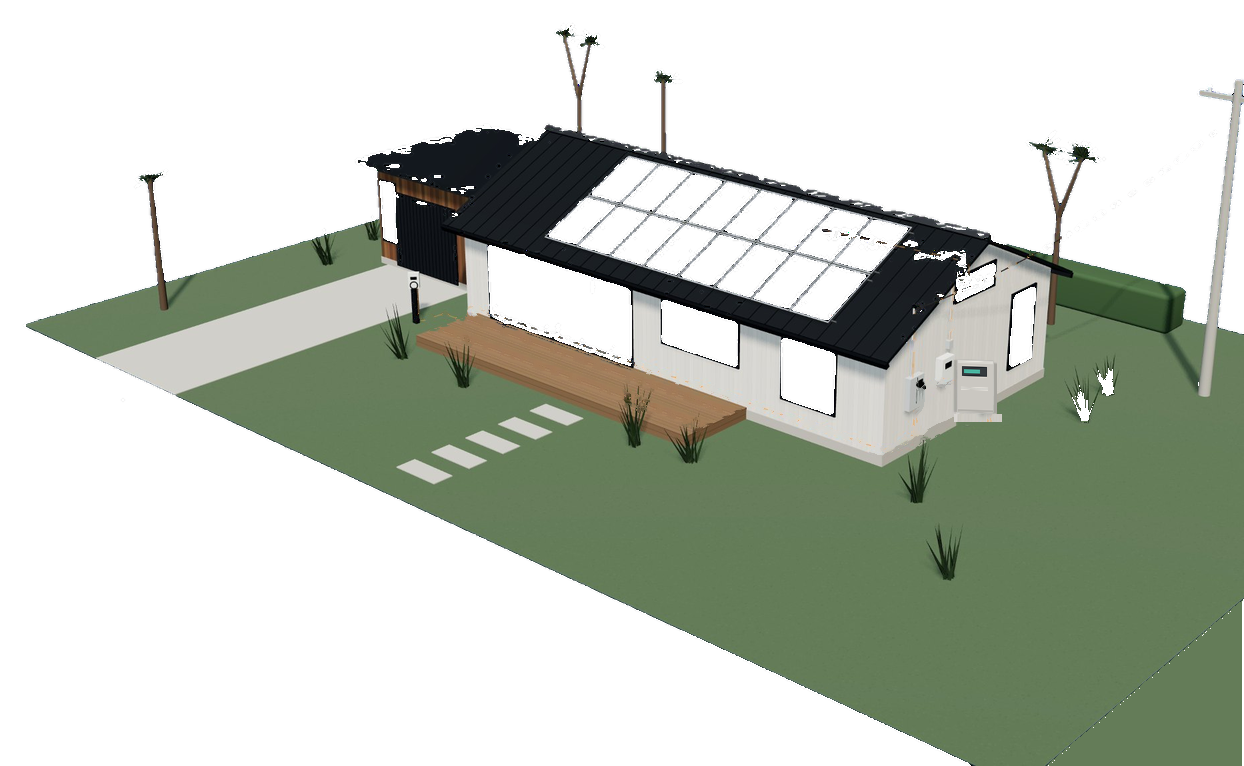
A rooftop solar system turns daylight into electricity the property can use. It is a chain of parts, and the system is only as good as the weakest link in that chain.
Cells, modules and strings
Each panel, properly called a module, is made of silicon cells. When light reaches a cell it produces a small direct current (DC). Cells are wired together inside the module, and modules are wired together on the roof in series groups called strings. Stringing raises the voltage so power can travel to the inverter efficiently.
The inverter
Household appliances and the network run on alternating current (AC). The inverter converts the array's DC into AC that matches the grid, and constantly adjusts the operating point of each string to draw the most power the conditions allow.
Into the property
Inverter output is connected through protection at the switchboard. Whatever the property is using at that moment is supplied first. Any surplus either charges a battery, if one is fitted, or flows out to the network, subject to the export arrangements for that connection.
- Daylight → DC from the modules
- DC → AC in the inverter
- AC → the property's loads first
- Surplus → battery, then grid
What it does not do
Panels produce nothing at night and less in cloud, winter and shade. A grid connected solar system without storage does not keep the lights on during a power cut, the inverter shuts down when the network does, for the safety of people working on the lines.
Related