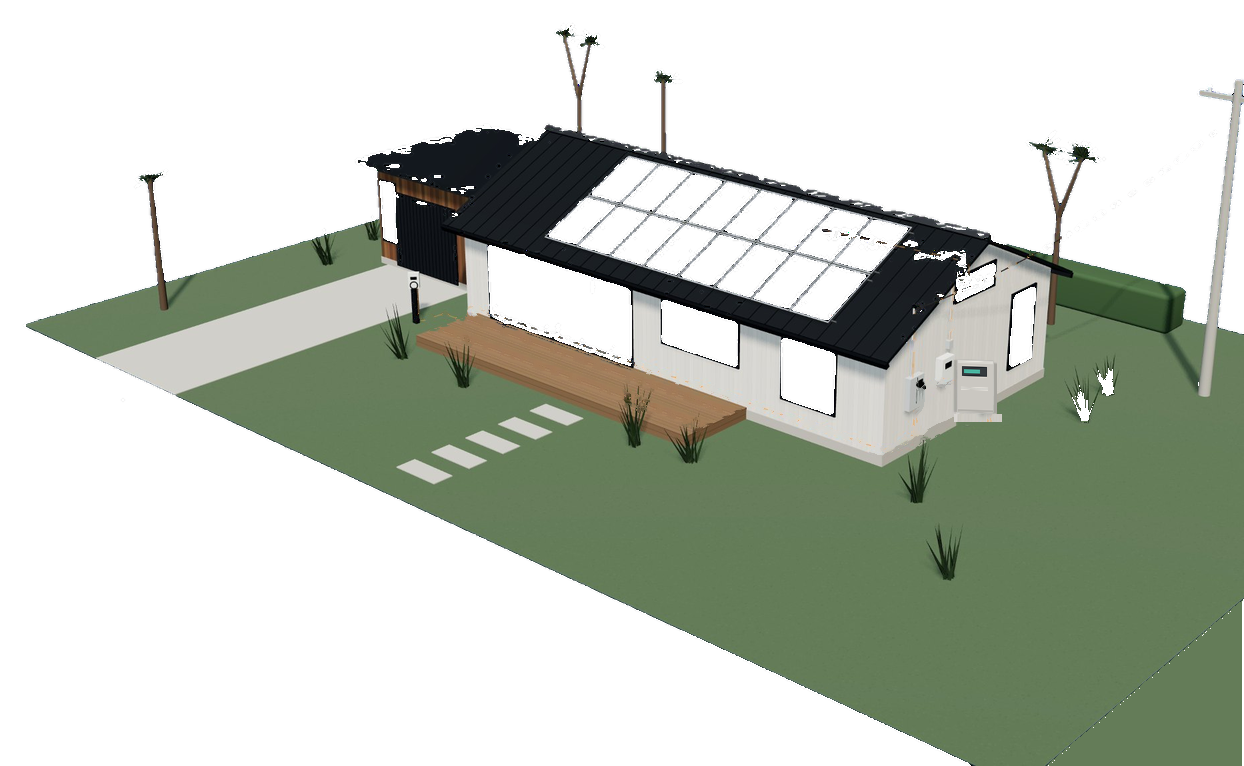
Two arrays with identical panels can produce noticeably different amounts of energy. The differences come from the site, and most of them can be assessed before anything is installed.
Orientation
In the southern hemisphere the sun tracks across the northern sky, so north facing planes collect the most energy over a day. East and west planes produce less in total but shift generation toward morning or late afternoon, which can suit how some households use power.
Pitch
New Zealand spans roughly 34° to 47° south. Steeper pitches favour the low winter sun; flatter pitches favour summer. Most residential roofs are a reasonable compromise, and the pitch is factored into the generation estimate rather than chased with tilt frames.
Shade
Shade has an outsized effect because modules in a string are connected in series. Trees, chimneys, neighbouring buildings and even a vent can reduce output from more than the panel they fall on. Stringing, module placement and optimisers or microinverters are ways to manage it.
Temperature and soiling
Panels are less efficient when hot, so a cold, clear spring day can outperform a hot summer one. Dust, salt and bird droppings reduce output over time, particularly on low-pitch roofs that rain does not clean well.
The season
Shorter days and a lower sun angle mean winter generation is much lower than summer. A design should be judged across the whole year, especially if the goal is winter self-supply.